

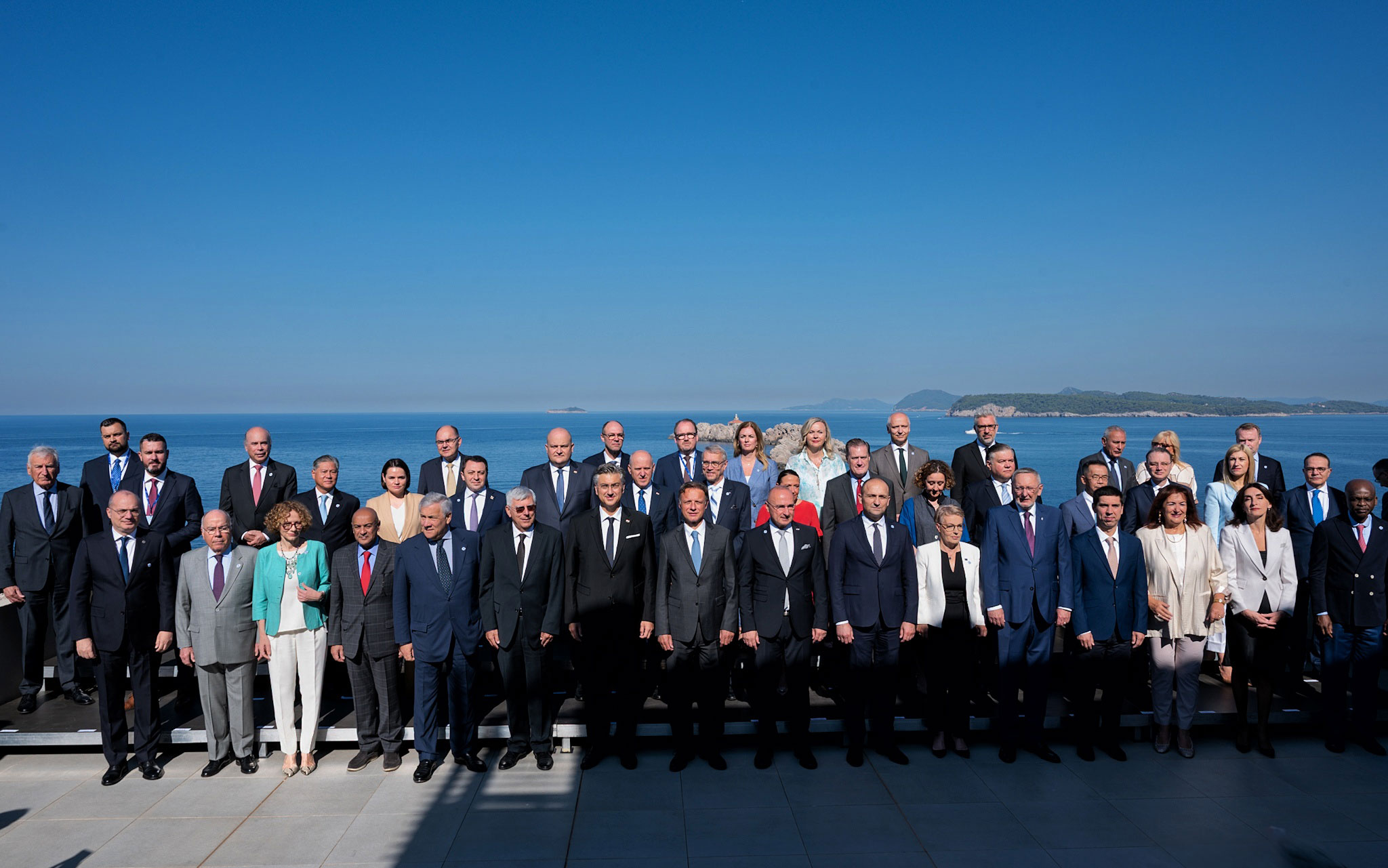
On the 11th and 12th of July 2025, the 18th edition of the International Conference Dubrovnik Forum 2025 was held in Dubrovnik, one of the most important platforms for European, transatlantic, and global dialogue. Under the motto "Channelling Change", the conference at the Hotel Dubrovnik Palace brought together around 500 participants, including political leaders, experts, academics, and young leaders from around the world. The two-day program was dedicated to discussing key global challenges, as well as opportunities in a time of rapid change and deep divisions in the world.
Dubrovnik as a symbol of diplomacy and international cooperation
Once again, Dubrovnik demonstrated its role as a symbol of Croatia’s diplomatic tradition and as an important venue for international dialogue. Organized by the Ministry of Foreign and European Affairs of the Republic of Croatia, the conference served as a platform for open and constructive discussions on topics such as rebuilding trust in international relations, strengthening European defence, transatlantic cooperation, and the impact of artificial intelligence on Europe’s competitiveness and security.
Opening the Forum, speakers such as Croatian Parliament Speaker Gordan Jandroković, Slovenian Parliament President Urška Klakočar Zupančič, and President of the Parliamentary Assembly of the Council of Europe Theodoros Rousopoulos emphasized the importance of mutual understanding, respect for human dignity, and joint action in facing today’s challenges.
Key topics and high-profile guests
The conference featured 17 panels and two special events attended by senior officials from Croatia and abroad. Among them was Croatian Prime Minister Andrej Plenković, who participated in the main panel discussion “Directing Change” and held a series of bilateral meetings. Participants included numerous high-ranking officials from Africa, Asia, Europe, Latin America, and the United States, as well as the Secretary-Generals of the OECD and the World Trade Organization (WTO), alongside representatives from international organizations such as NATO, the UN, and the OSCE.
A highlight was the participation of OECD Secretary-General Mathias Cormann, who praised Croatia’s significant progress toward full membership in the organization, which could be achieved as early as 2026. Panel discussions ranged from the future of global trade, European defence, and digital transformation, to artificial intelligence, security issues, and integration in the Western Balkans. A particularly engaging session addressed different interpretations of Western values and the role of young leaders in global cooperation.
Ministerial meeting in support of Ukraine and the region
As part of the Forum, a ministerial meeting of Southeast European countries reaffirmed strong support for Ukraine’s sovereignty, territorial integrity, and democratic aspirations. Croatian Foreign Minister Gordan Grlić Radman stressed that there is no free and prosperous Europe without a free and prosperous Ukraine. The meeting was attended by ministers from Albania, Montenegro, Greece, Kosovo, Moldova, Romania, North Macedonia, Slovenia, Serbia, and Turkey.
During the Forum, Prime Minister Plenković highlighted the multiple crises that have marked the past decade—from the COVID-19 pandemic to Russia’s aggression against Ukraine—and emphasized the need for responsible and joint action to resolve conflicts and build a more stable world. He particularly stressed the importance of strengthening European defence capabilities, coordination within NATO, and finding balanced solutions in trade relations between Europe and the United States.
Croatia on the European and global stage
The Forum also reaffirmed Croatia’s strong engagement on the European stage—from the EU enlargement process, where Croatia actively supports the European perspective of Southeast European states, to the OECD accession process, expected soon. Discussions between the Croatian Prime Minister and top international officials, including WTO Director-General Ngozi Okonjo-Iweala and the High Representative for Bosnia and Herzegovina Christian Schmidt, further underlined the importance of stability and European integration for the region.
In his closing remarks, Minister Grlić Radman confirmed the Dubrovnik Forum’s role as a bridge between East and West, North and South, a place where dialogue, cooperation, and managing change for a better future are promoted.