

The finest Romanesque-Gothic cloister abounding with valuable works of art.
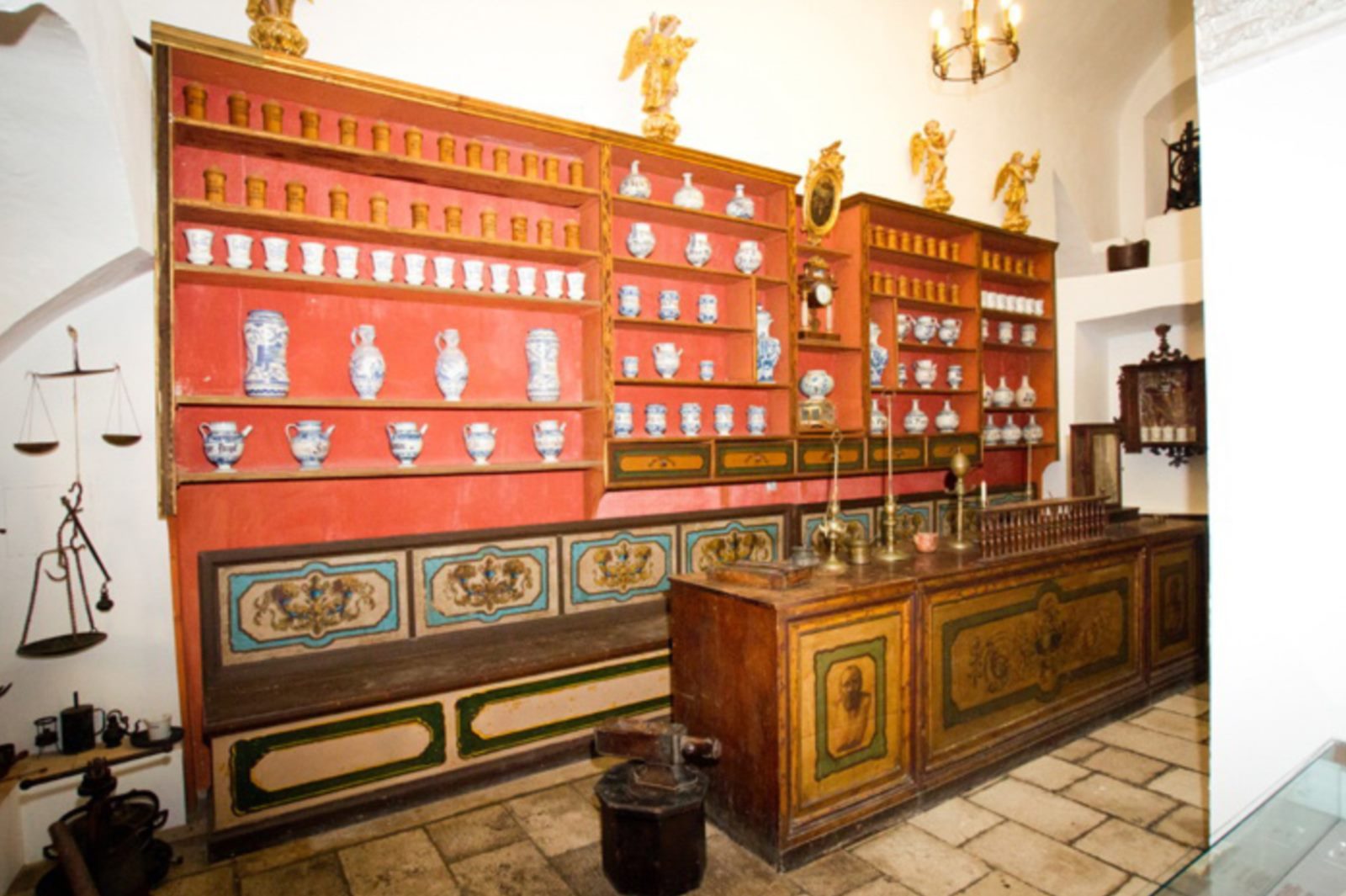
The first document about the Dubrovnik Franciscans from 1235 mentions their Monastery of St Thomas in the Pile suburb, which had been demolished upon the announcement of war with King Uroš II Milutin of Serbia in 1317, when the present day Franciscan Monastery within the city walls was probably built (close to the Pile Gate). A monastery library was additionally built in the 17th century, while a theological preparatory was added to the monastery in 1896. After the earthquake which had taken place on 6 April 1667, the church was restored in the Baroque style. One of the largest and most grandiose Franciscan monasteries, it has two cloisters: the upper (in the Renaissance style, with arches and semicircular vaults) and the lower cloister (in the Romanesque-Gothic style, characteristic of ornamented hexaphoras, rosettes and capitals with various geometric, plant-, human- and animal-like adornments) with arches and a promenade. The cloister, constructed by Mihoje Brajkov of Bar (first half of the 13th century) is considered one of the finest Romanesque-Gothic buildings in our country. It has 120 columns and 12 massive pilasters. In 1860 the cloister was adorned with the frescos depicting the life of St Francis. The 14th century sarcophagus of M. Gučetić with reliefs is built into a cloister wall, while a fountain with the statue of St Francis stands in the cloister centre. The monastery houses the inventory of the old Friars Minor Pharmacy from 1317, the well-preserved pharmacy furniture from the 16th century and the 15th and 16th century vases from Siena and Florence. Other exhibits include various presses, mortars, a 14th century still, manuscripts of recipes, precise scales, quarts, etc.
In the Museum library there are valuable copies of manuscripts and chorales, as well as the valuable paintings by unknown masters, a 14th century head relic of St Ursula, and a collection of ex vuoto jewellery.
The Monastery complex includes the third oldest pharmacy in Europe, which has been active uninterruptedly since 1317. Judging only from the viewpoint of continuity, this is perhaps the oldest pharmacy on the Old Continent. Although the pharmacy initially satisfied only the needs of the Monastery, it gradually expanded in proportion with the increasing needs of the citizens, who supported it with their donations. The pharmacy smelled of mint, sage and medicinal herbs which the Franciscans used for their preparations that cured various illnesses. The pharmacy library comprises a large number of text-books with recipes for secret potions but also for quite ordinary medicines. Many of the manuscripts include the elixirs of youth, the good memory medicines, and also the brew that - as they claimed - could grant peace in one's marriage!
The parts of pharmacy inventory, mainly from the 17th and 18th centuries, are exhibited at the Franciscan Monastery Museum, the renaissance hall one enters from the cloister. It houses the paintings by old masters, valuable jewellery and ancient mass vestments.
Address: Placa 2, 20000 Dubrovnik
Phone: +385 20 641 110, +385 20 641 123
Email:
Website: https://malabraca.com/muzej/